The Past That Is No More
When the senior citizens of our parish reminisce about the early days in Chembur, it is hard to visualise the Chembur they knew in those days. It was virtually a wilderness, isolated from the city, with the main connecting link being the steam-engine train that plied every hour between Mankhurd and Kurla. The few existing roads were unsurfaced country roads.
With parish and parish limits largely undefined, the old residents of Chembur didn’t quite know which parish they belonged to. Some who came from Byculla or elsewhere in the city continued to look to their old parish church to minister to their needs; others went to the surrounding parish churches for their Sacraments and Sunday obligations.
A Christian Colony
It was only a person with great foresight who would have chosen this area as a place for a Christian Colony to be established. The late F.A.C. Rebello was the mastermind behind St. Anthony’s Homes Co-operative Society which was established in 1925. However, even he could hardly have foreseen the rapid growth that brought nearly three lakhs of people to live here.
The Society acquired tracts of land from the government and did everything in their power to persuade Catholics to buy plots for their homes at less than three Rupees per square yard.
From its inception, the Society had in mind a Catholic Church and schools for boys and girls. Plots of land were set aside for these purposes, as well as a plot for a cemetery. A Sports Pavilion was built in 1934 which for several years served as a centre both for education and worship. The Convent School was opened in 1952. Sunday worship continued in the pavilion until our present Church was opened in 1959.
A Parish Comes Into Being
Until 1953, our parish came under the jurisdiction of Mankhurd, and many efforts were made to have a priest permanently at the service of the Chembur people. Different diocesan priests and religious served here at different times, but it was only in 1953 that the late Cardinal Gracias handed over the care of this area to the Redemptorist Fathers. At that time, Township Colony (now called Tilak Nagar) was included in the parish, but after a few years, it was handed over to the care of the Capuchin Fathers in Kirol.
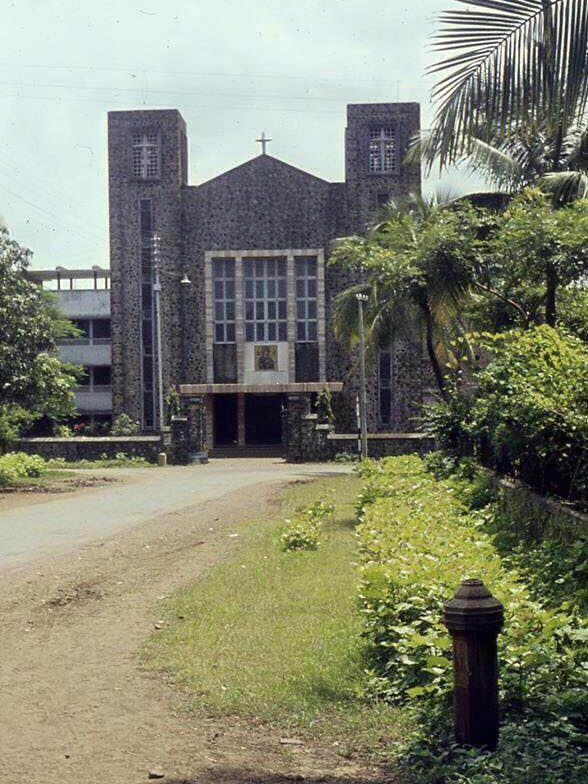
Arrangements were soon made to have a Church built in the area and the dynamic leadership of Fr. John F. Mangan, C.Ss.R. provided the answer. It speaks much for the magnanimity, selfless labour and sacrifices of all those who were on the scene years ago that it was possible to build this Church in which we worship Our Lord today, for it meant starting almost from scratch with so few Catholics around the place and hardly any resources to fall back upon. Work on the plot of land provided by the St. Anthony’s Homes Co-operative Society was started and the Church was blessed and officially thrown open to the public in 1959
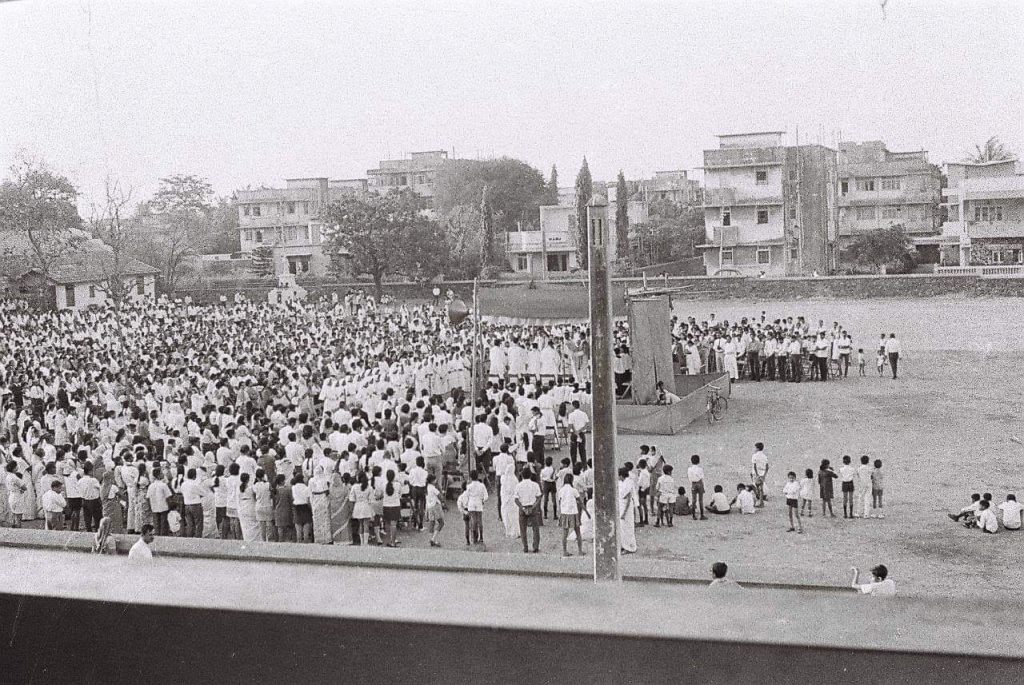
.
 OUR LADY OF PERPETUAL SUCCOUR CHURCH, CHEMBUR